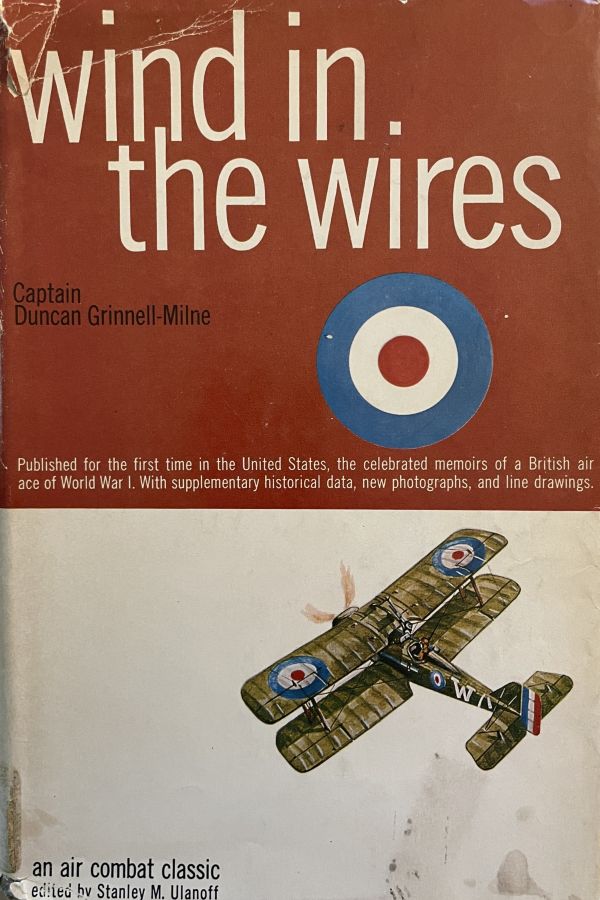

If you want to know about Grinnell-Milne, save yourself the time, and check out the articles you can find online. But I wouldn’t bother with Wind in the Wires.
High Point: There is no doubt Grinnell-Milne was an exceptionally brave and capable military pilot.
Low Point: The book is a rather disjointed account with many gaps in the narrative.
Author: Duncan Grinnell-Milne
Publication Date: 1968
Genre: Aviation
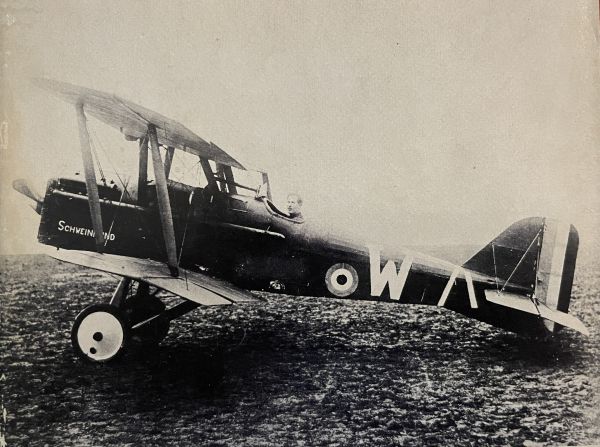
In Wind In The Wires, Captain Duncan Grinnell-Milne recounts his experience as a British pilot during World War I. After a few months as a pilot, his aircraft suffered engine failure over German territory. He spent almost three years as a prisoner of war, but returned to fly after his escape. His six confirmed victories earned him status as an ace, and he was awarded the Distinguished Flying Cross.
If you made it through my first paragraph, you may not glean much more by reading Grinnell-Milne’s entire book.
It’s a rather disjointed account with many gaps in the narrative. There is no description of his three-year captivity and escape from a German POW camp (He explains he wrote another book about that. So unless you wish to read that book, too, you are out of luck). He skips over most of his victories, but you’ll read plenty about more mundane missions.
There is no doubt Grinnell-Milne was an exceptionally brave and capable military pilot. And he has an easy conversational style that could have effectively related meaty descriptions of Allied efforts in the skies over Europe. But for whatever reason, except for the occasional nugget, that’s not what you get.
If you want to know about Grinnell-Milne, save yourself the time, and check out the articles you can find online. But I wouldn’t bother with Wind in the Wires.

Sources For This Book
Free eBook (Project Gutenberg): Not available
Free Audiobook (LibriVox): Not available
Available to Purchase: AbeBooks, Biblio, Thriftbooks
