

At the end of the day, the one genuine truth may be that one doesn’t have to agree with the author’s arguments to believe Jesus is not a myth.
High Point: Childs’ arguments are fascinating as he attempts to provide empirical evidence that Jesus was real.
Low Point: The author’s attitude exhibited towards those readers who may disagree with his arguments.
Author: Dr. Thomas Childs
Publication Date: 2018
Genre: Religion
Listen to the audio version of this review
space
When Logic Becomes Lecture
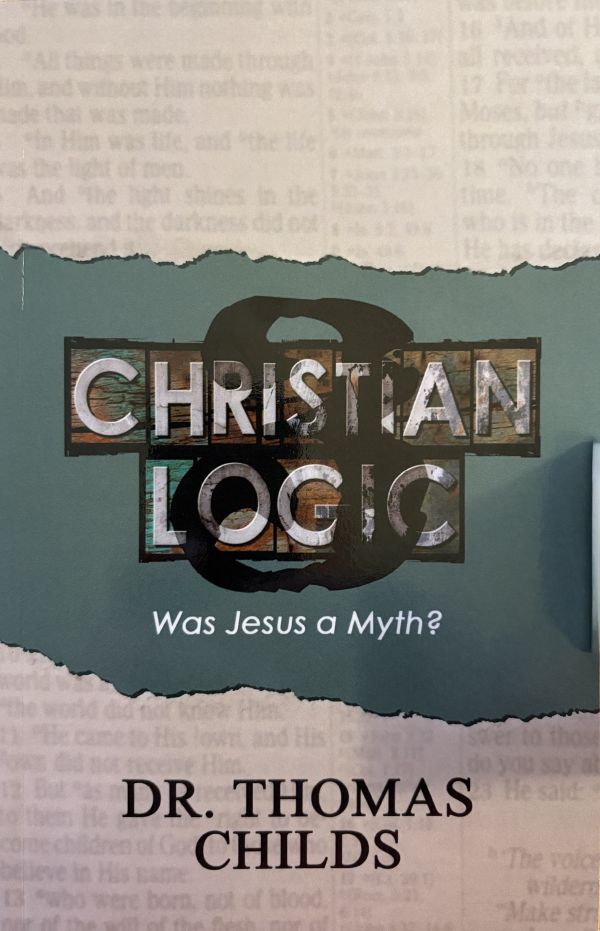
Was Jesus a Myth? is the third volume in Thomas Childs’ Christian Logic series. Unlike the first two editions—where Childs engages the reader in a conversational style, and encourages them to apply their own logic to work through their religious questions—this third installment is preachy. Childs tells us what logic we are to apply, and lets us know we’re wrong if we disagree with him—however sincere we might be.
It’s apparent this approach is not limited to the central question of Christ’s authenticity. It extends to his supporting arguments. He presents them not as interpretations open to discussion, but as settled truth. Or as he puts it repeatedly, there is truth and then there is everything else. And he insists his assumptions, extrapolations, the citing of tradition, and his two tenuous empirical references are all truth. He talks about confirmation bias in relation to other viewpoints, but this book reeks of it.
Along the way, Childs veers into topics that are not directly related to the fundamental question of a mythical Jesus—topics such as the desire of some people to treat Jesus as a Santa Claus and the reasons Christ had to be crucified. If one is already a believer, these thoughts may align nicely with the overall theme. But if you’re not, you may question their relevance to the basic discussion.
At the end of the day, the one genuine truth may be that one doesn’t have to agree with the author’s arguments to believe Jesus is not a myth.
What’s frustrating about this book is that Childs’ arguments and even the side topics are fascinating. Whether or not one agrees with them all, they certainly inspire additional thought on the reader’s part—just as his first two books did. But, sadly, his attitude towards his readers detracts from the overall impact.
That attitude is exemplified when he begins one of his chapters with the following thought:
“The worst type of person is the one who is [sic] sincerely believes they are right, but they are sincerely wrong, and they have no clue.”
When I read this passage to a good friend recently, he reminded me about that adage many of us learned as children: “When you point the finger at someone else, there are three pointing right back at you.”

Sources For This Book
Free eBook (Project Gutenberg): Not available
Free Audiobook (LibriVox): Not available
Available to Purchase: AbeBooks, Biblio, Thriftbooks