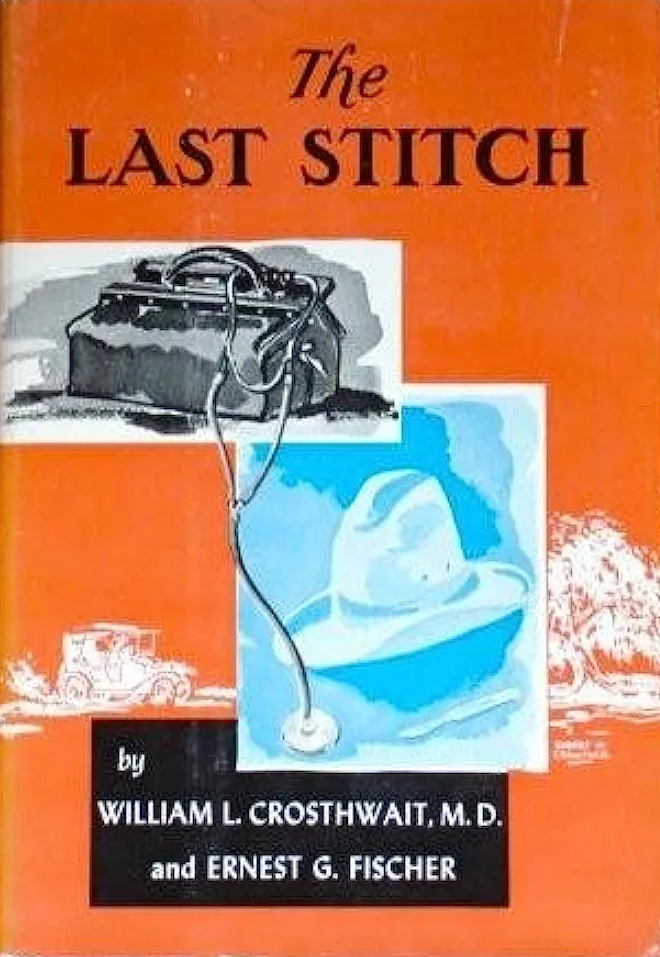

In The Last Stitch, Dr. Crosthwait’s stories about his youth in Mississippi and his early years as a physician in the Texas backwater sound as though they were taken from a Mark Twain novel.
High Point: His stories about Bachelor Jim, Aunt Lucky, and others are classic.
Low Point: The accounts of his accomplishments with state boards and organizations are impressive, but not as interesting as his earlier years.
Author: William Crosthwait, M.D.
Publication Date: 1956
Genre: Biography
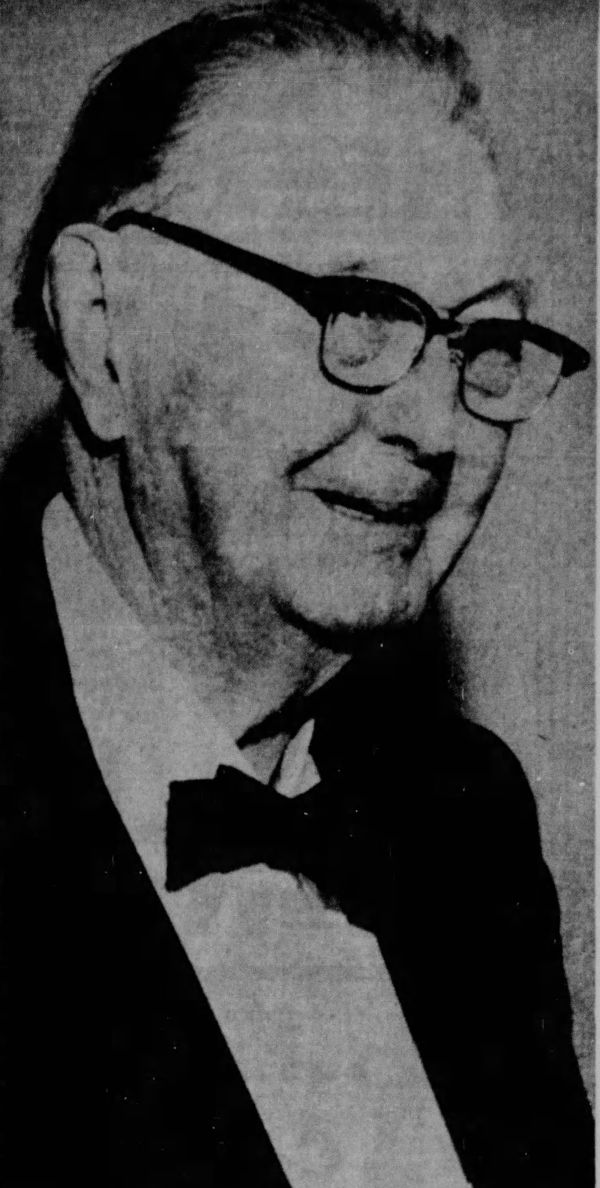
Dr. William Crosthwait was 83 years old when he narrated The Last Stitch—his memoir as a Texas country doctor from the late 1800s through the mid-1900s.
Fascinating Characters
His stories about his youth in Mississippi and his early years as a physician in the Texas backwater sound as though they were taken from a Mark Twain novel. In fact, some of his characters would have fit well in a Twain book—Bachelor Jim, Aunt Lucky and her big brown jug, and Boozer Jackson to name a few. And he includes topics such as qualities a country doctor should look for in a good horse.
As a developing physician, he brushed shoulders with a few well-known people of his time. They included Dr. Wallace Abbott, who eventually established Abbott Laboratories, and William Randolph Hearst, whom Crosthwait says funded a relief effort he directed following the 1900 Galveston hurricane.
Last Half Disappoints
Unfortunately, the latter half of the book bogs down a bit. Crosthwait describes some of his accomplishments as he served on state medical boards and other organizations. They are significant, but not nearly as interesting as the stories of his early days.
He skips the period of the Great Depression completely. He explains that that time was still too painful to talk about. That would have been understandable for readers in the 1950s who likely still remembered their own painful experiences. But for 21st century readers, it’s a big hole in the narrative. I’m sorry we missed hearing Dr. Crosthwait’s perspective.
The Last Stitch is a book worth reading—at least the first half—for the unique look it provides of life in the old days of rural America.