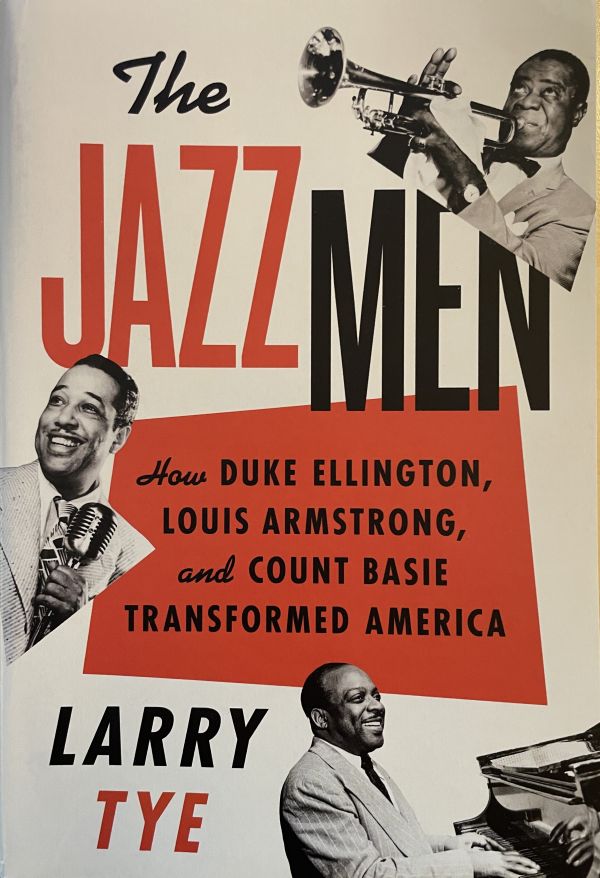

The Jazz Men will likely deepen your appreciation of the three musicians who overcame tremendous obstacles—some of their own making—to become established as enduring institutions of American music.
High Point: The discussions of their music, including their own perspectives as well as those who performed with them.
Low Point: The description of the musicians’ bathroom habits.
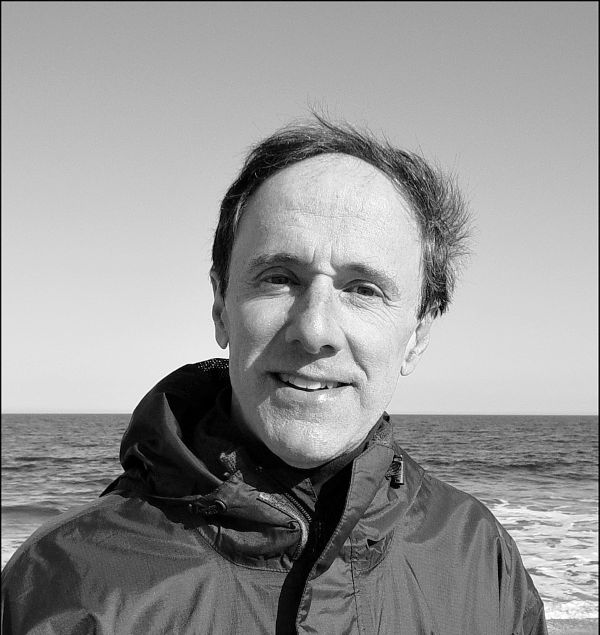
Author: Larry Tye
Publication Date: 2024
Genre: Arts
Listen to the audio version of this review
A Deep and Sometimes Disturbing Look
You would be hard-pressed to neatly summarize Larry Tye’s chronicle about Louis Armstrong, Count Basie and Duke Ellington—The Jazz Men. It’s a very deep dive into the lives of these three pioneers of popular music.
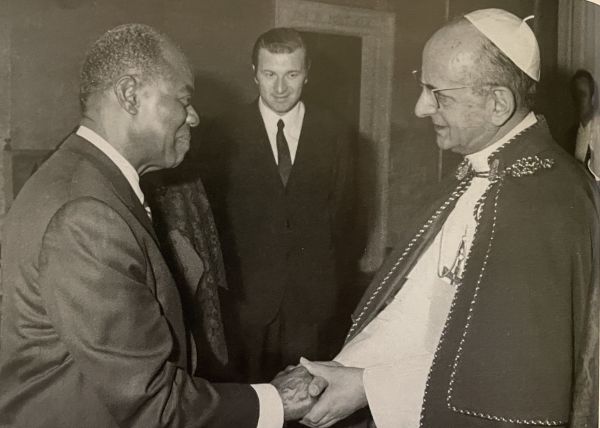
Tye provides an open and sometimes disturbing look into all three as they developed into icons feted by world leaders, royalty, and even popes. He doesn’t pull punches as he talks about their ties to the mob, their alcohol and drug abuse, infidelities, and even their bathroom habits.
Overcoming Bias
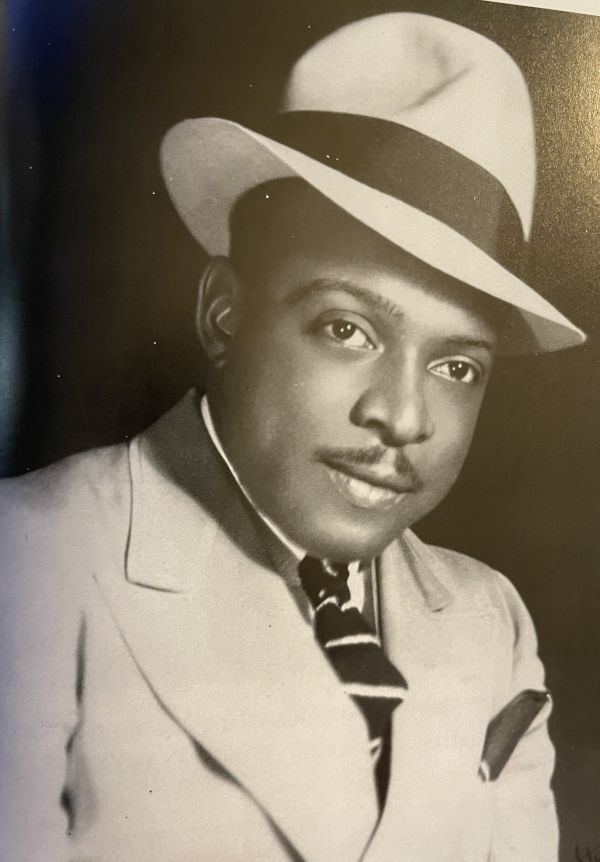
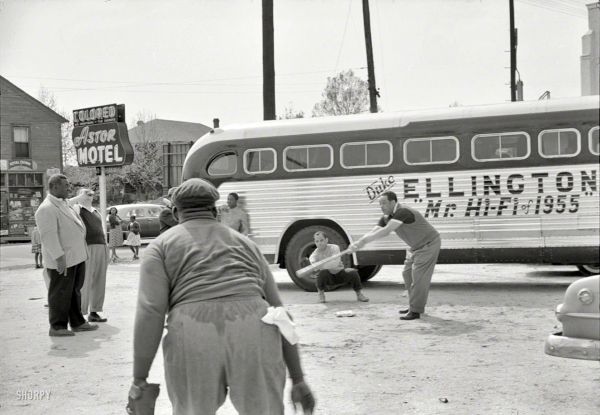
Despite all that, the overriding message is about their phenomenal success in an American society dominated by racial bias. They toured all over the country, navigating the Jim Crow laws enforcing racial segregation in the United States. Their quality of music, though—developed and refined over more than 40 years—gradually helped them overcome some of the impediments posed by bigotry. But ironically, as they gained popularity with white audiences, all three encountered charges of subservience from some of their own race.
Be aware that racial epithets are scattered throughout the book. Virtually all originate from quotes from a variety of sources, including the three men themselves.
The Music
At the end of the day, though, The Jazz Men isn’t all about race or the personal failings of Armstrong, Basie and Ellington. It’s about the music. And Tye gives us fascinating insights into the makeup of their music.
We see the impact made by Armstrong’s “West End Blues”. Released in 1925, some call his trumpet solo intro “the most important 15 seconds in all of American music.”
We see why Ellington called his “Sacred Concerts”—released in the mid-1960s—“the most important thing I’ve ever done.”
And we hear the story behind Basie’s collaboration with composer Sammy Nestico on a tribute to his late wife—a beautiful ballad called “Katy”—released in 1983, less than a year before Basie himself died.
Tye has an easy style. For example, he makes most of his points through stories rather than a recitation of facts. But they are based on extensive research gathered through documents and interviews as evidenced by a bibliography of more than 30 pages. As a New York Times bestselling author, his work on The Jazz Men will likely have you looking for more of his books.
More than anything, though, The Jazz Men will likely deepen your appreciation of the three musicians who overcame tremendous obstacles—some of their own making—to become established as enduring institutions of American music.
Quotes
Louis Armstrong
| But when it came to racism, Armstrong observed, “up North, the accent was different, but the melody the same.” |
| No matter the tune, “it all came out magnificent,” [said] Louis’s friend Jack Bradley. “Louis could play the New York telephone directory and it would come out magnificent.” |
| [Re West End Blues] He offers every fan something: a golden toned opening cadenza that has been called “the most important 15 seconds in all of American music,” a soulful and intentional scatting duet with the clarinetist, and a spine tingling and near perfect last chorus. |
| [Re West End Blues] “It was the first time I ever heard anybody sing without using any words,” said jazz diva Billie Holiday. “But the meaning used to change, depending on how I felt. Sometimes the record would make me so sad, I’d cry up a storm. Other times the same damn record would make me so happy.” |
Count Basie
| “We may well ask what kept [Basie] out there, rolling to the piano in a wheelchair during his last three years,” said jazz historian Gary Giddins. “Some who knew him well said he had to work to pay off gambling debts. Some who knew him better said he incurred gambling debts as an excuse to keep playing.” |
| Another time Basie was mistaken for a car-park attendant. It happened just after he finished a concert at the Academy of Music in Philadelphia where he received ten standing ovations. “Bill and I were out in the parking lot after the performance when a white man tossed him his car keys,” recalled Tony Bennett. “I’m not sure how I would have have reacted in Bill’s shoes. But Count Basie was a band leader. He knew how to kid, cajole, and josh people in his way. ‘Get your own car, buddy,’ he told the man. ‘I’m tired, I’ve been parking them all night.’” |
Duke Ellington
| Don George, Duke’s friend and sometimes lyricist, cataloged Ellington’s iniquities, but he was surprised to discover Duke’s sublime side during a New Year’s Eve party when he encountered the band leader alone in a small room: “He was kneeling, his eyes closed, his head bowed, his hands folded across his chest. He was praying aloud. I didn’t move, not wishing to disturb him. He prayed for strength to keep him humble, to appreciate what he had, and to keep fame, money, and women secondary to his love for God.” |
| Duke said he didn’t care what the public thought of his sacred works—that they were between him and his deity—but he must’ve been offended when some church leaders denounced his compositions as a reflection of “this sin-sick world.” Others, however, saw rapturous jazz as a way to win back rebellious youth and disenfranchised Blacks in that riotous and separatist decade of the 1960s… The feedback that moved Ellington the most, as he made clear in his memoir, came not from a journalist or a pastor, but from a girl who approached him after one concert and said, “You know, Duke, you made me put my cross back on!” |
Sources For This Book
This book was purchased at Intermission Bookshop in Brownwood, Texas
Free eBook (Project Gutenberg): Not available
Free Audiobook (LibriVox): Not available
Available for Purchase: Various online sources
