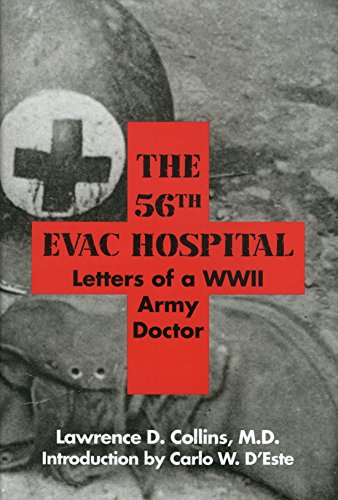

Lawrence D. Collin’s The 56th Evac Hospital is an explicit example of the way ordinary people stepped up to perform extraordinary services during the Second World War.
High Point: The way Dr. Collins allows you to become acquainted with him and his family.
Low Point: Many of Dr. Collins’ letters describe similar events and feelings to the point of being repetitive. But you’ll get a sense of the monotony when you read them anyway.
Author: Lawrence D. Collins
Publication Date: 1995
Genre: History
Lawrence D. Collin’s The 56th Evac Hospital is an explicit example of the way ordinary people stepped up to perform extraordinary services during the Second World War.
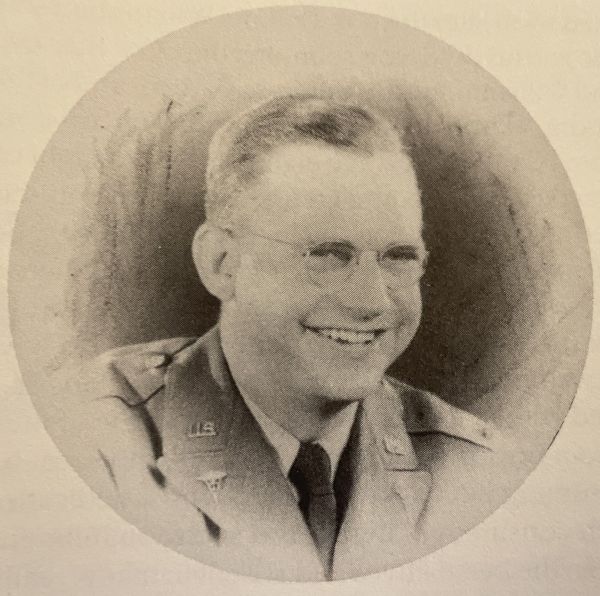
Dr. Collins was an internist based at Baylor Medical College in Dallas when his entire unit was called to active duty. He left behind a wife and a toddler, eventually landing in North Africa and Italy. He and his Texas colleagues served from April 1943 through October 1945.
Letters to his Wife
Dr. Collin’s comprised his book almost entirely of letters to his wife. In some instances, wartime censorship prevented him from providing specifics about locations or operations. At the same time, he also occasionally shielded his wife from some of the brutal experiences he and the unit endured. Consequently, when he produced this book 50 years later, he frequently offered the additional detail he couldn’t share at the time.
The letters portray a broad range of emotions—homesickness, pride, boredom, frustration, humor, and now and then, apprehension. Apparently in response to concerns voiced by his wife, his advice regarding his young daughter’s growth and development is particularly poignant—as well as his fruitless attempts to find a doll he could send her for Christmas.
Many of the letters seem repetitious, describing similar events and feelings. Read them anyway to get a notion for what Dr. Collins and others were sacrificing.
Unit Pride
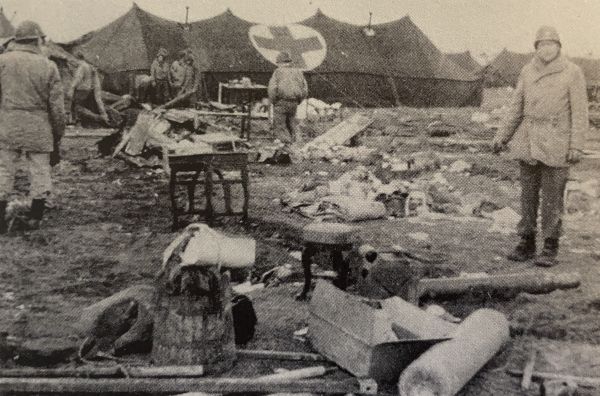
Dr. Collins was intensely proud of the 56th Evac Hospital—especially during the nine weeks spent on the Anzio beachhead. During that time, the hospital was shelled repeatedly, resulting in death and injury to medical personnel. Despite that, the unit performed incredibly well, earning the Silver Star for three nurses—the first women to ever receive it.
Even 80 years later, The 56th Evac Hospital evokes an attachment between the reader and Dr. Collins and his colleagues—sufficiently so that you might experience a bit of elation as you read the book’s final sentence:
“Stepping once more upon native soil and later walking out of the separation center to see my wife waiting at the end of a short walk, the end of thirty-one months separation, were the brightest highlights in the insanity of war.”
Quotes
In Our Spare Time
| Maybe this is a good time to make an observation on the comparative merits of reading over drinking. Everyone has had to make adjustments since leaving Home, some making it one way and some in another. A good many men, myself included, are reading more than ever before, and it can provide to be a lifesaver. However, quite a few do make their adjustment with alcohol exclusively, and most of us do to a limited extent. Christmas went much harder with the heavy drinkers than with the heavy readers, and the difference was very obvious. |
| [Following a performance for the troops by composer Irving Berlin] He’d name a few songs and then have the audience clap for them as he named them again, singing which one received the most clapping. Two or three times he’d mention “God Bless America” as one of the choices, but no one applauded it. Finally, he sang it anyway as his closing number, and it was then obvious why nobody would admit they wanted to hear it. They’re just too homesick, and most eyes were on the ground. |
The Toll of War
| Honey, please don’t worry when you don’t hear from me. This is the hottest place the hospital has ever been to—or ever will be again—and we’re all safe and sound… I hardly have time to eat, haven’t had a bath since we left our last set up, but do manage to get enough sleep. I simply can’t write every day with things as they are. Don’t worry ever. |
| All of the twenty-year-old Navy personnel we see over here still look like twenty-year-olds. In contrast, all of the twenty-year-old infantrymen look like thirty-year-olds after they’ve been in combat awhile. The infantrymen are the ones I think deserve all of the medals and ballyhoo. |
Thoughts on War and Country
| War is an inexplicably tolerated and recurrent human experience. |
| It always kills my soul to learn that our country, state, town, or people are not the paragons of perfection that childish, childish idealism might picture them. |
| I seriously doubt that the national conscience keeps the German people awake nights any more than ours does from our institutional atrocities. Darling, don’t let these terrible things you’ve learned poison your mind with hatred. What they should do is humble us all with the realization that five thousand years of civilization haven’t widened the gap between humans and brutes any more than they have. |
Sources For This Book
This book was purchased at Barber’s Bookstore in Fort Worth, Texas
Free eBook (Project Gutenberg): Not available
Free Audiobook (LibriVox): Not available
