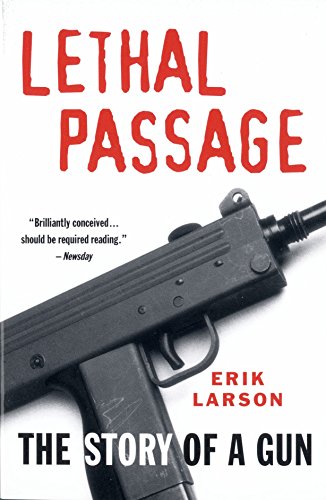


In Lethal Passage: The Story of a Gun, author Erik Larson uses a term—gun tyranny—to sum up the United States’ failure to address its gun crisis.
High Point: Larson’s style makes his description of events personal. You’ll empathize with the victims, while shaking your head in wonder at the lack of empathy of those who contributed to events.
Low Point: The realization that the incident Larson described 30 years ago would barely make headlines today.
Author: Erik Larson
Publication Date: 1995
Genre: Social Science

Listen to the audio version of this review
space
In Lethal Passage: The Story of a Gun, Erik Larson uses a term—gun tyranny—to sum up the United States’ failure to address gun violence. And although the definition of “tyranny” has been cheapened by its frequent use in presidential political rhetoric, gun tyranny is an expressive way to describe the lack of governmental action—especially since most polls indicate Americans for decades have consistently desired more safeguards related to guns.
At the core of Larson’s book is a school shooting that occurred in Virginia Beach, Virginia, in 1988. One teacher was killed and others were wounded by a student using a semi-automatic pistol called a Cobray M-11/9. Larson tracks the gun from its design through its manufacture; its sale to an adult who bought it on behalf of the student; its use in the shootings; and finally, to the incident’s impact on the victims and their families.
Larson then suggests legislation under the name “Life and Liberty Preservation Act.” He says the Act will preserve Americans’ rights to own firearms, but make gun owners safer and more responsible. It would also hold them accountable when their guns are misused. But then Larson bleakly asserts, “The Life and Liberty Preservation Act doesn’t have a chance in hell of being passed.”
Lethal Passage is a tough, but valuable read. Not only because of the events Larson describes, but also because the book was written 30 years ago. The incident on which the book is based would barely make headlines today.

Quotes
| Even the simplest regulations meet outraged opposition from the NRA, the Second Amendment Foundation, and the Gun Owners of America. Theirs is a reflexive opposition based on the rather paranoid belief that any step toward firearms regulation must necessarily take us one more step down the road to federal confiscation of America’s guns and, willy-nilly from there, to tyranny and oppression. Yet survey after survey shows that most Americans favor rigorous firearms regulations. |
Sources For This Book
Free eBook (Project Gutenberg): Not available
Free Audiobook (LibriVox): Not available
Available to Purchase: Alibris, Biblio, Thriftbooks
Similar Books You May Enjoy…
Whither Mankind (1928)
Charles A. Beard (editor)
The Death of a President (1967)
William Manchester
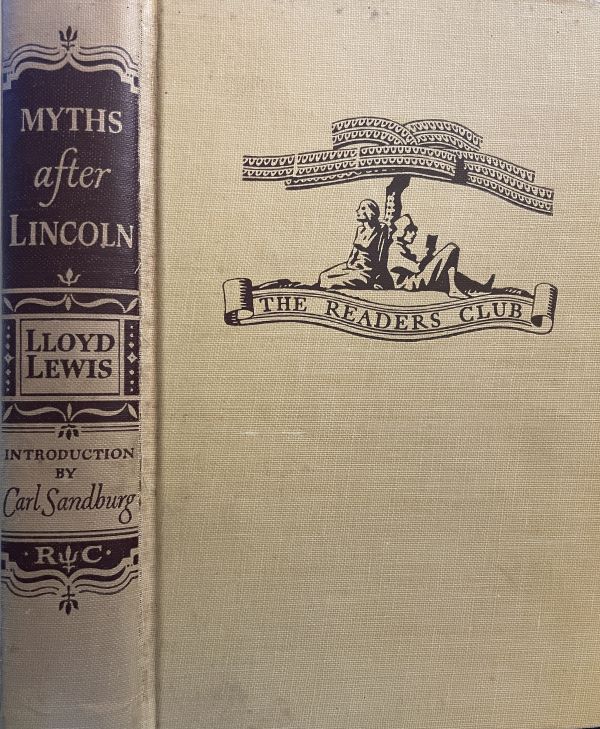
Myths After Lincoln (1941)
Lloyd Lewis
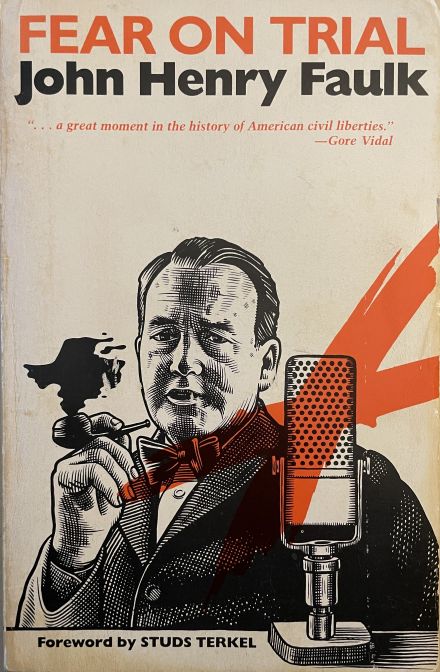
Fear on Trial (1963)
John Henry Faulk