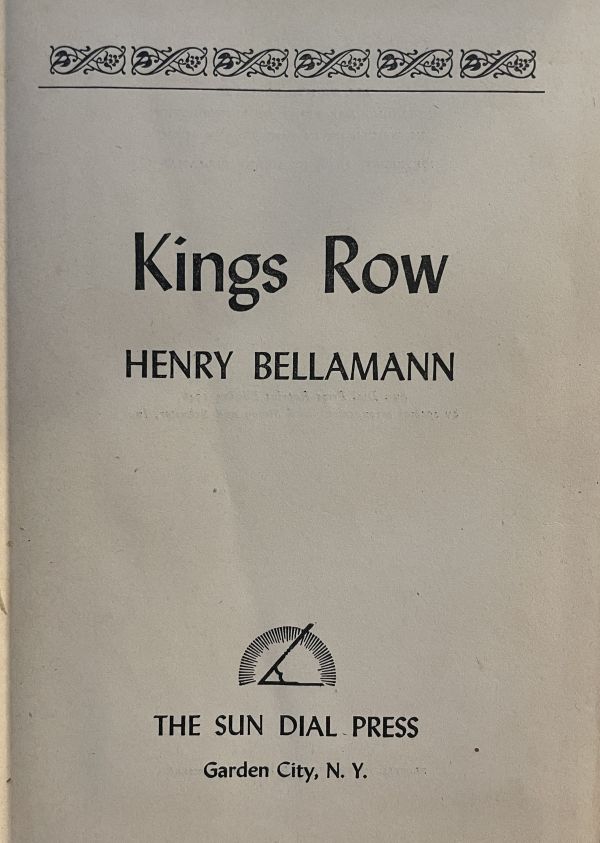


Kings Row is about how good fortune and misfortune don’t always respect the level of goodness in an individual.
High Point: Bellamann’s storyline continually ricochets between darkness and light, never leaving you in one place too long.
Low Point: None
Author: Henry Bellamann
Publication Date: 1940
Genre: Fiction
I’ve read that the intent of Henry Bellamann’s Kings Row was to skewer the author’s hometown—Fulton, Missouri—in retaliation for an unhappy childhood there.
I’m not convinced.
Granted, Kings Row is a story of many evils: incest, greed, cruelty, murder, political corruption and racism to list a few. But it’s also a story of love, friendship, devotion, sacrifice, tolerance and charity.
Bellamann may have used Fulton, its people and events as models for his book. But his message doesn’t seem to be as base and petty as running down his hometown.
Instead, it’s about how good fortune and misfortune don’t always respect the level of goodness in an individual. The extent of a person’s resilience from misfortune—or the stewardship of their good fortune—may not always dictate the eventual outcome.
Good people don’t always win. But sometimes they do. That’s how life works.
Bellamann has an easy style that encourages binge reading. His storyline continually ricochets between darkness and light, never leaving you in one place too long.
Be aware, though, that he uses conversations between characters to expound on topics such as the existence of God. The main protagonist will often take long walks during which he will think through his conundrums. These conversations and mental interludes are usually fascinating, but can be a bit tedious at times.
Regardless, this is a book well worth the time. Once Kings Row concludes, you may find yourself wishing for a few more pages.
Quotes
| The universe was not conceived in tragedy and travail. It evolved, and continues to be, only in the throes of desperate struggle. Pain, and ugliness, and brute force rule it. In the midst of that continuous hurricane of destruction and death there are born from time to time men who resolve this disorder. They create another vision from the fire and dust of disaster. They are poets, and musicians, and artists. That is their answer to the ugliness of the world. They do not ask to be understood. They do not even ask to be liked. But without them we should find the universe an intolerable habitation. They lessen its terrors, and ameliorate the eternal torture of its unanswered and unanswerable questions. They are a gallant company. They go singling down the highways of the world, and the echoes of their words comfort us when they have passed. …that company of God’s own elect…” |
| The preacher who has too much hard work to do becomes perhaps too zealous, he believes too much in himself, he thinks of himself as an emissary of God—and naturally he thinks who is there to question God?—and he too becomes impatient. He merely wishes you to listen while he tells you. |
| Good and bad—they did not come in waves… The generations of man might seem to come wave-like across the improvised pattern of time, but good and evil ran always in parallel streams. Sometimes they crossed, sometimes the murk of the one obscured the clarity of the other, but in time, yes, all streams run clear at last. |
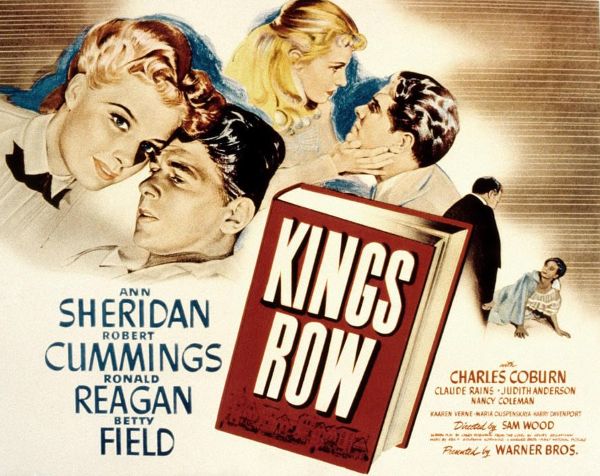
Sources For This Book
Free eBook (Project Gutenberg): Not available
Free Audiobook (LibriVox): Not available
Available to Purchase: AbeBooks, Biblio, Thriftbooks
