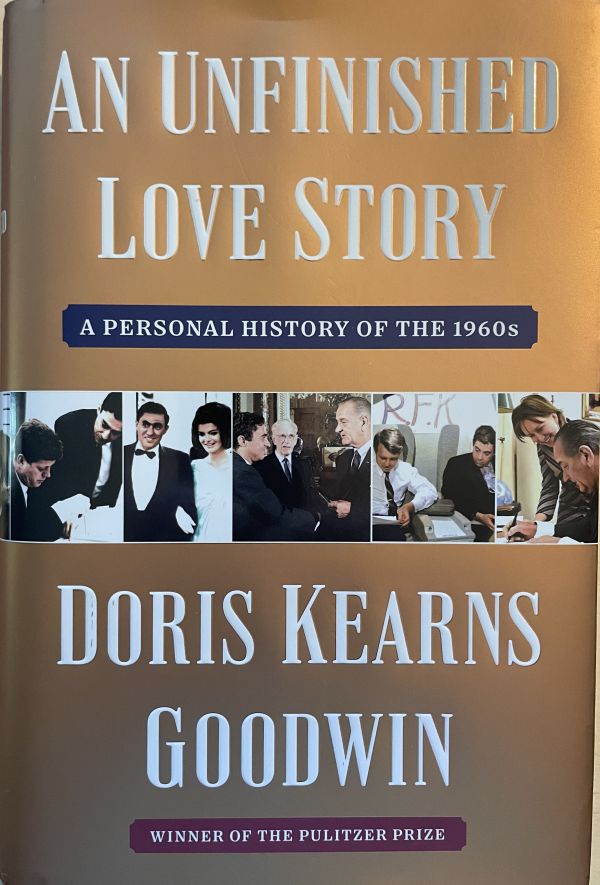


This book wasn’t intended to be balanced. An Unfinished Love Story is a one-sided account seen through the eyes of two idealistic young people.
High Point: All the behind-the-scenes stories about significant historical events of the 1960s.
Low Point: None
Author: Doris Kearns Goodwin
Publication Date: 2024
Genre: History
Listen to the audio version of this review
space
In An Unfinished Love Story, Doris Kearns Goodwin offers a personal reflection on the political and social landscape of the 1960s, seen through the eyes of both her late husband, Richard Goodwin, and herself. This memoir presents a unique perspective on the decade’s triumphs and tragedies, blending historical insight with firsthand recollections.
This book wasn’t intended to be balanced. An Unfinished Love Story is a one-sided account seen through the eyes of two idealistic young people.
And as a tribute to her late husband, Goodwin paints a picture of him that is unashamedly biased—as might be expected from a loving spouse. Her pride in his associations and accomplishments—as well as her occasional retorts to his critics—makes the book much more personal than a dry history.
The book delves into the groundbreaking progress made during the early to mid-60s on issues that continue to resonate today, such as healthcare and civil rights. However, it also highlights American society’s turmoil of the era—war, assassinations and civil unrest—that shaped and sometimes hindered that progress. Goodwin’s narrative helps readers understand the complexities of the time, showing both the achievements and the costs of those struggles.
The final chapter focuses on her husband’s deteriorating health, his eventual death, and Goodwin’s attempts to adjust to life without him. The chapter is charged with compassion and loss but without being maudlin and weepy. It is not an uncomfortable chapter to read, and will likely generate an empathy with the author and her experience.
In her wrap-up, Goodwin voices concerns about the current erosion of historical awareness in American society. She argues that history is more important than ever during times of crisis—offering perspective and guidance. Yet, as she points out, history itself is under threat—its relevance in school curriculums is being questioned at a time when its lessons are desperately needed.
Goodwin closes with a powerful reflection on what the 1960s can teach us today:
“…allowing us to see what opportunities were seized, what mistakes were made, what chances were lost, and what light might be cast on our own fractured time. Too often, memories of assassinations, violence, and social turmoil have obscured the greatest illumination of the Sixties, the spark of communal idealism and belief that kindled social justice and love for a more inclusive vision of America.”
This call to recognize both the challenges and the hope of the 1960s serves as a timely reminder of what can be achieved when society and government—as a community—are willing to dream and strive for a better future.
Quotes
| [Supreme Court Justice Felix Frankfurter to his law clerk Richard Goodwin] “Our job is to enforce the law, including the Constitution,” the Justice repeatedly said. “We have nothing to do with your abstract notions of justice or liberty. Only with what the law provides. Trample the law for your own ends, Dick, and the time will come when you’ll be trampled under someone else’s ends.” |
| We had lived surrounded by books all our married lives. They were our element. We had written them, read for pleasure, amassed mini libraries for particular projects, collected them, organized them into ever shifting categories, and in the end, dwelled inside what we joyfully called our house of books. |
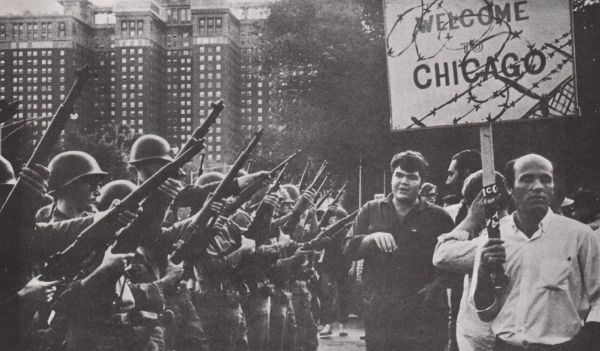
| When Lyndon Johnson signed the 1964 Civil Rights Act, knowing well the massive upheavals its implementation would bring, he spoke of a great “testing time” to come. We are clearly in the midst of a profound “testing time” today, and at such times, I have long argued, the study of history is crucial to provide perspective, warning, counsel, and even comfort. At a moment when the guidance of history is most needed, however, history itself is under attack, its relevance in school curriculums questioned. |
Sources For This Book
Free eBook (Project Gutenberg): Not available
Free Audiobook (LibriVox): Not available
Available to Purchase: AbeBooks, Biblio, Thriftbooks
