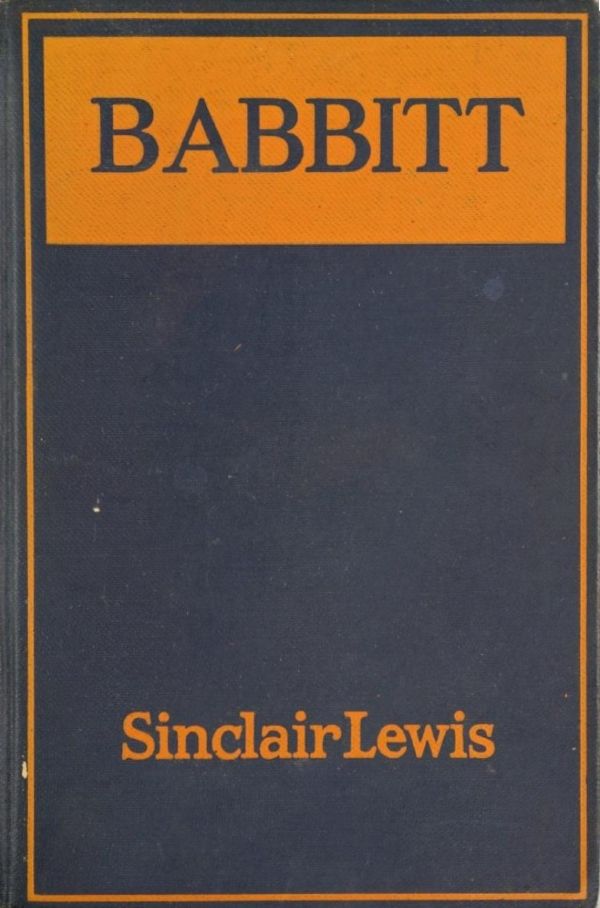

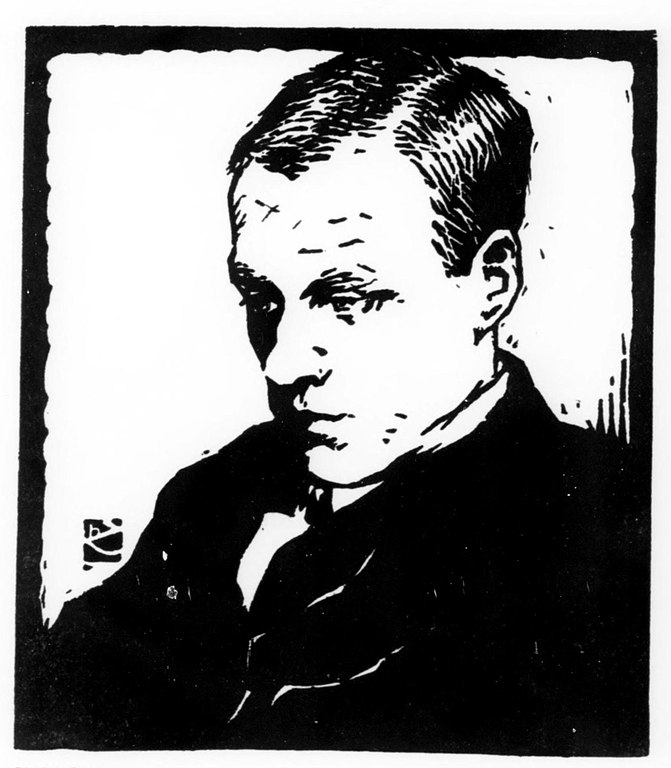
Sinclair Lewis had a knack for poking fun at the American brand of morality. In Dodsworth, it was marriage. In Elmer Gantry, it was organized religion. In Babbitt, he skewers the middle class.
High Point: Lewis’ conclusion doesn’t tie up everything, but is still quite hopeful and satisfying.
Low Point: None
Author: Sinclair Lewis
Publication Date: 1922
Genre: Fiction
Listen to the audio version of this review
space
Sinclair Lewis had a knack for poking fun at the American brand of morality. In Dodsworth, it was marriage. In Elmer Gantry, it was organized religion. In Babbitt, he skewers the middle class.
George F. Babbitt is a prosperous businessman in a bustling Midwest city. He’s built the life of the American Dream—a successful business, a nice house, a loyal wife, three decent children, memberships in the best civic clubs, and a reputation for being one of the community’s solid citizens.
Babbitt’s problem is that he’s going through a midlife crisis—essentially asking himself, “Is this all there is?”
The author guides us through Babbitt’s journey as he pushes the boundaries of the conventional comportment expected of leaders of the middle class. At times, it’s funny. Sometimes, though, it’s rather sad.
True to form, Lewis doesn’t tie everything up neatly at the end. But it’s still a satisfying and positive conclusion.
Babbitt is another example of the continued relevance of Sinclair Lewis’ social critiques. First published in 1922, the novel—save for a handful of period details—still resonates a century later.
Quotes
| [Conversation between the richest man in town and Babbitt’s father-in-law] “We’re safe as long as the good little boys like George Babbitt and all the nice respectable labor-leaders think you and me are rugged patriots. There’s swell pickings for an honest politician here, Hank: a whole city working to provide cigars and fried chicken and dry martinis for us, and rallying to our banner when some squealer like this fellow Senaca comes along! Honest, Hank, a smart codger like me ought to be ashamed of himself if he didn’t milk cattle like them, when they come mooing for it!” |
| “Do you know, the other evening Eunice told me her papa speaks three languages!” said Mrs. Babbitt. “Huh!” [replied Babbitt], “That’s nothing! So do I—American, baseball, and poker!” |
Sources For This Book
Free eBook (Project Gutenberg): Babbitt
Free Audiobook (LibriVox): Babbitt
Available to Purchase: AbeBooks, Biblio, Thriftbooks
