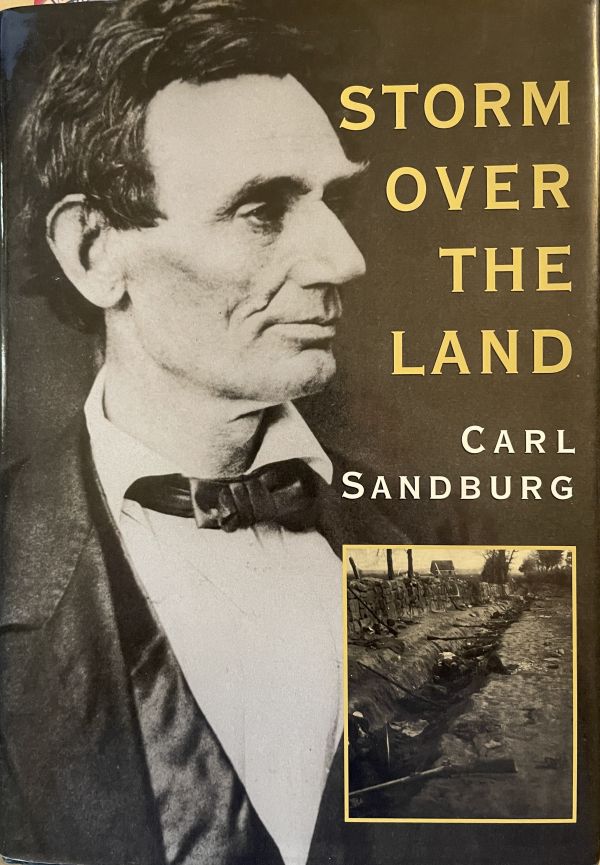

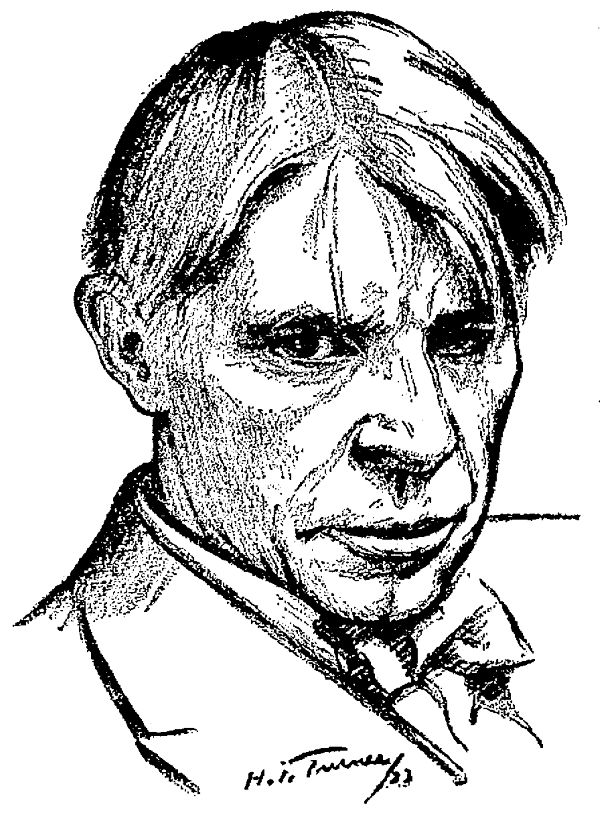
Storm Over the Land is Carl Sandburg’s second consolidation of his four-volume biography, Abraham Lincoln: The War Years. This one focuses on the American Civil War.
High Point: We get a vivid picture of the prosecution of the war from the attack on Fort Sumter through the final capitulation of the Confederate forces.
Low Point: Sandburg explores only the surface of Confederate strategies and tactics. You feel there are fascinating stories missing from this narrative.
Author: Carl Sandburg
Publication Date: 1939
Genre: History
Listen to the audio version of this review
space
Storm Over the Land is Carl Sandburg’s second consolidation of his four-volume biography, Abraham Lincoln: The War Years.
Unlike the first effort which focused on Lincoln himself, Storm Over the Land describes a broader picture of the American Civil War—from the months immediately preceding the rebel capture of Fort Sumter in 1861 through Lincoln’s murder and the Confederacy’s collapse in 1865. There’s little discussion about the 1860 presidential election or other events that led to the rebellion. And the narrative concludes prior to the re-admission of the former Confederate states into the Union and the period of reconstruction which followed.
What we get is a vivid picture of the prosecution of the war—primarily from the Union perspective. Sandburg describes the unfulfilled promise of Lincoln’s generals and their repeated failures. But he skillfully shows how the most effective—namely Grant, Sherman and Sheridan—slowly rose to the top and eventually inflicted destruction on the Confederacy from which it could not recover.
You may find yourself wanting a deeper dive into Confederate strategies and tactics. Sandburg explores only the surface, and sometimes generates questions which go unanswered.
Overall, though, Sandburg’s narrative is interesting, informative, smooth, and employs a logical progression as he pulls together the disparate campaigns and battles comprising the war. And he always includes the almost unfathomable numbers of dead and wounded associated with each.
A couple aspects of Storm Over the Land stand out.
Sandburg devotes an entire chapter on Lincoln’s address at Gettysburg, including the entire text of the speech that resonates today as it did in 1863.
And fittingly, he bookends Storm Over the Land with the musical scores of two well-known military tunes. As the call goes out for troops, Sandburg provides the score for “Reveille,” the morning call to arms. And to commemorate the awful destruction, suffering and waste, he concludes the book with “Taps,” the mournful melody that signals the day’s—and the war’s—end.
Quotes
| Amid a wilderness of fact and illustration the maker of a narrative picks his way and considers the instruction “Write till you are ashamed of yourself and then cut it down next to nothing so the reader may hope beforehand he is not wasting his time.” |
| [Re Lincoln’s Gettysburg Address] [Lincoln] had stood that day, the world’s foremost spokesman of popular government, saying that democracy was yet worth fighting for. He had spoken as one in a mist who might head on deeper yet into mist. He incarnated the assurances and pretenses of popular government, implied that it could and might perish from the earth. |
| Now also, as a result flowing from the war, the United States was to take its place among nations counted World Powers. The instinct of the Tories and the imperialists of the British Empire that they, if the North won its war for the Union, would have a rival was correct. And as a World Power the expectation was it would be a voice of the teachings of Washington, Jefferson, Jackson—and Lincoln—speaking for republican government, for democracy, for institutions “of the people, by the people, for the people.” |
Sources For This Book
This book was purchased at Rhythm & Co. Books in Glen Rose, Texas
Free eBook (Project Gutenberg): Not available
Free Audiobook (LibriVox): Not available
Available to Purchase: AbeBooks, Biblio, Thriftbooks
