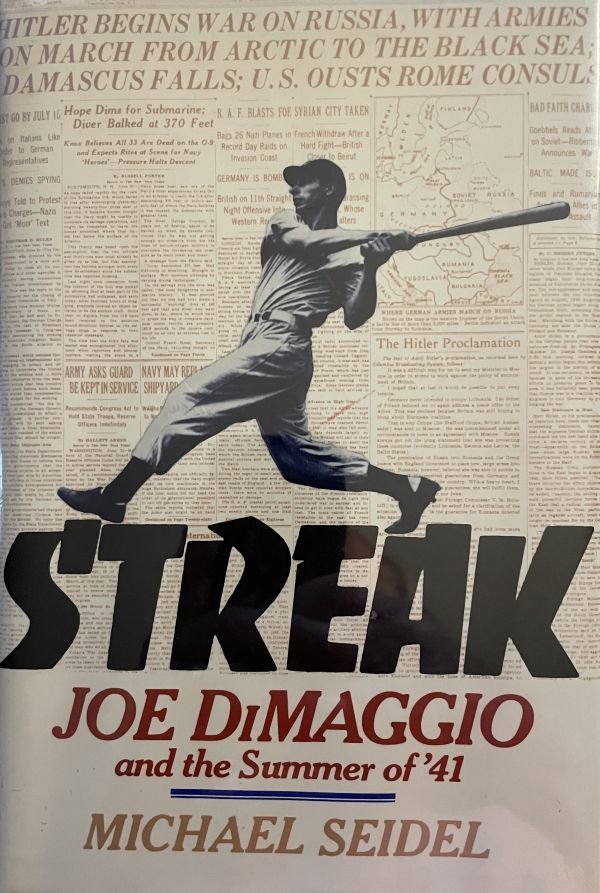


Streak: Joe DiMaggio and the Summer of ’41 is a classic book about a classic summer of sports and world events.
High Point: The book is structured with a separate chapter for each of the 56 games that made up the Streak, but includes considerably more than the details of the game.
Low Point: For some reason, Seidel goes out of his way to point out DiMaggio’s memory lapses as he recounted his experiences 40 years later. It serves no purpose other than to detract from the overall story.
Author: Michael Seidel
Publication Date: 1988
Genre: Sports
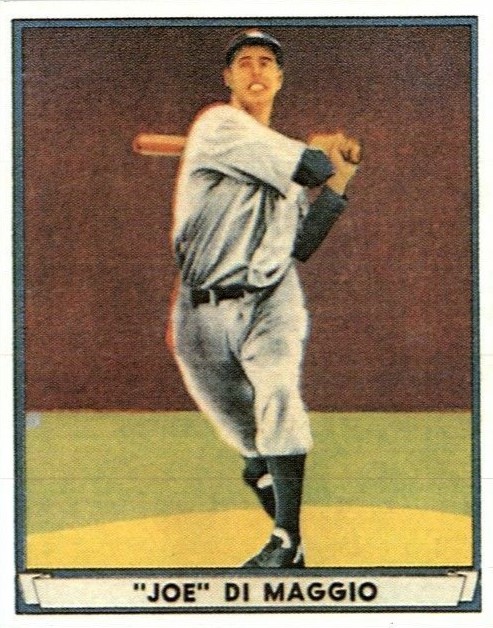
In Streak: Joe DiMaggio and the Summer of ’41, Michael Seidel paints a captivating portrait of America in the months prior to its entry into World War II. Although the focus is the baseball great’s 56-game hitting streak, the book is really about the world as its nations rush toward global warfare.
Seidel assembled his book with a chapter for each of the 56 games plus the 57th game in which the streak was broken. He bookends those chapters with a prologue and epilogue which introduces and wraps up the summer of 1941. His structure is effective in first setting the stage for the summer, and then drawing the narrative to a satisfying completion.
You might expect 56 individual game descriptions to be tedious and redundant, but Seidel made it anything but. His accounts of each game are stimulating, describing the high points, the close calls that nearly ended the streak, and the outstanding performances by DiMaggio and others.
But the majority of each chapter deals with events occurring outside the game. Seidel discusses other sporting events—inside and outside of baseball—such as the classic Joe Louis-Billy Conn heavyweight boxing title fight; Ted William’s .406 single-season batting average; and the death of Lou Gehrig. But mostly, he relates key events regarding the war in Europe, America’s active isolation movement, and the US government’s preparations for war.
During the summer of 1941, Rudoph Hess made his midnight flight to England. The British navy battled Germany’s newest and biggest battleship, the Bismarck. Germany invaded Russia. Franklin Roosevelt fought striking labor unions and implemented quotas for the production of ships and aircraft. Along with a few human-interest stories, these are the types of events Seidel includes in each of the game chapters.
Still, the emphasis is Joe DiMaggio’s hitting streak of 56 games—a major league record that still stands—and the great performances by other stars of the day.
Streak: Joe DiMaggio and the Summer of ’41 is a classic book about a classic summer of sports and world events.
Quotes
| DiMaggio’s legendary streak and Williams’ .406 average in 1941 crown mirror performances the likes of which may belong to an era whose glory resides not only in its achievements but in its pastness. |
| On a day that saw the European war break forth from a temporary lull with an incredible 9 million men clashing furiously on all three salients along the Russian front, 67,468 jammed Cleveland’s Municipal Stadium to cheer DiMaggio’s effort to extend his streak and watch the Indians make what could be their last serious run at the league-leading Yankees. The hostilities in Russia constituted the largest single day’s battle in the history of the world; the crowd in Cleveland that night was merely the largest of the 1941 baseball season. |
| The game [which ended DiMaggio’s streak] was among the most memorable ever played. Millions know the name of the two Cleveland pitchers, Al Smith and Jim Bagby, who shut down DiMaggio that night. Sportswriter Dave Anderson pointed out that head shots of Smith and Bagby appeared in newspapers all over the country the next day as if they had assassinated a king. |
Sources For This Book
This book was purchased at Midway Used & Rare Books in St. Paul, Minnesota
Free eBook (Project Gutenberg): Not available
Free Audiobook (LibriVox): Not available
Available to Purchase: AbeBooks, Biblio, Thriftbooks
