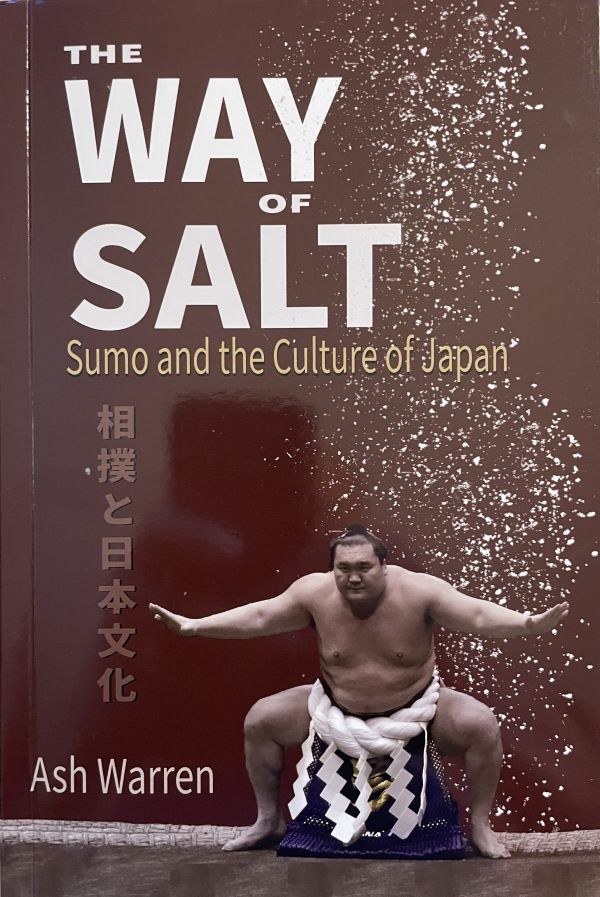

If you’re at all curious, take a look at sumo through the many online resources. And then if it strikes your interest at all, read The Way of Salt: Sumo and the Culture of Japan.
High Point: The descriptions of the culture and tradition behind the sport.
Low Point: None
Author: Ash Warren
Publication Date: 2020
Genre: Sports
As one who grew up playing baseball, basketball, and American football, I wouldn’t have expected to develop an interest in the ancient Japanese sport of sumo. But one look at a honbasho (one of six professional sumo tournaments held in Japan each year) generated a growing interest. And then The Way of Salt: Sumo and the Culture of Japan by Ash Warren was enough to get me hooked.
This book does not get into the particulars of sumo rules, strategies and such. Those details are readily available online. Instead, the book delves into the sport’s Shinto origins and how the old cultures have shaped sumo. All aspects of sumo involve ceremony, and this book explains their origins and purposes. Discipline and code are key to the development of the rikishi (wrestler)—not just during matches, but as a way of life.
Warren is a Westerner who writes for Westerners. Even for one who may not be familiar with Japanese culture, the book is straightforward and easily grasped. It’s packed with photographs and drawings, many in color. It was published recently enough that many photos include rikishi who are still active. And it includes a particularly helpful glossary of the terms used throughout the book.
Many who enjoy competitive athletics are seeking something to supplant the calamity that American college sports have become. Sumo is an intriguing alternative.
If you’re at all curious, take a look at sumo through the many online resources. And then if it strikes your interest at all, read The Way of Salt: Sumo and the Culture of Japan.
Quotes
| Rikishi are people who make decisions and live with the consequences. They avoid the psychological turmoil that comes from life’s many vicissitudes not by “moving on,” but by accepting things as they are, by simply adjusting to the fact that there is no other way. In Japan, people respect this kind of tenacity rather than make fun of it, looking up to the person who faces their problems squarely and just refuses to give up… |
| For rikishi…the goal is not to succeed in the Western sense of the word, but to succeed in a spiritual sense. Their “goal,” or more accurately their “motivation,” is to devote themselves wholeheartedly to practice and to what they’re doing at each moment, and with this to show “fighting spirit” at all times. In a sense, day-to-day life, and sumo is about concentration on the ”now” and not the future, an idea that is very closely aligned with the Zen Buddhist concept of mindfulness: the quality and power of mind that is aware of what is happening, without judgment. |
| This is the true sumo: allowing yourself (as a result of your day after day, year after year life of practice), to react naturally to your opponent (without thought), and to take the result (whether victory or defeat) with a polite bow, and then to go back to your heya to think about tomorrow’s battle because this one is finished and already forgotten. And so, begin again. |

Sources For This Book
Free eBook (Project Gutenberg): Not available
Free Audiobook (LibriVox): Not available
Available to Purchase: AbeBooks, Biblio, Thriftbooks
