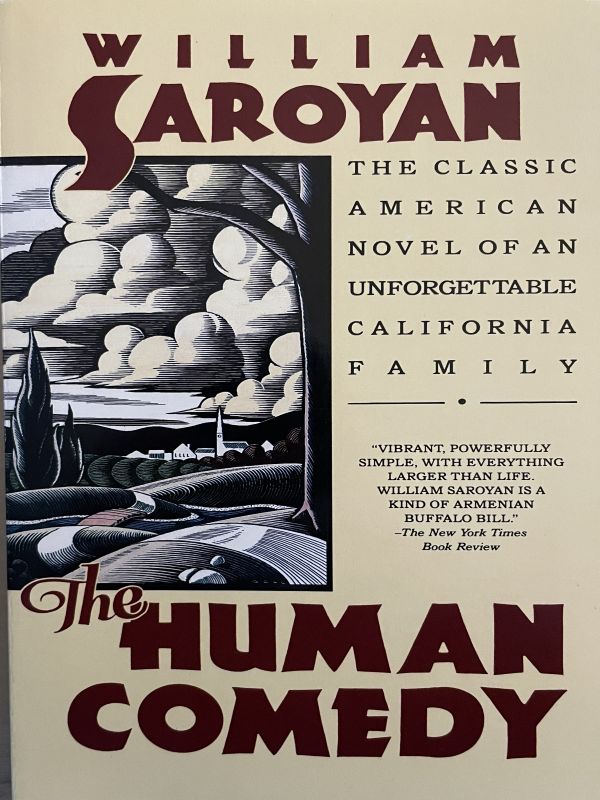

The Human Comedy is one of those rare and treasured books you’ll wish you could experience new over and over again.
High Point: The way in which Saroyan pulls all the disparate story threads together at the end.
Low Point: None
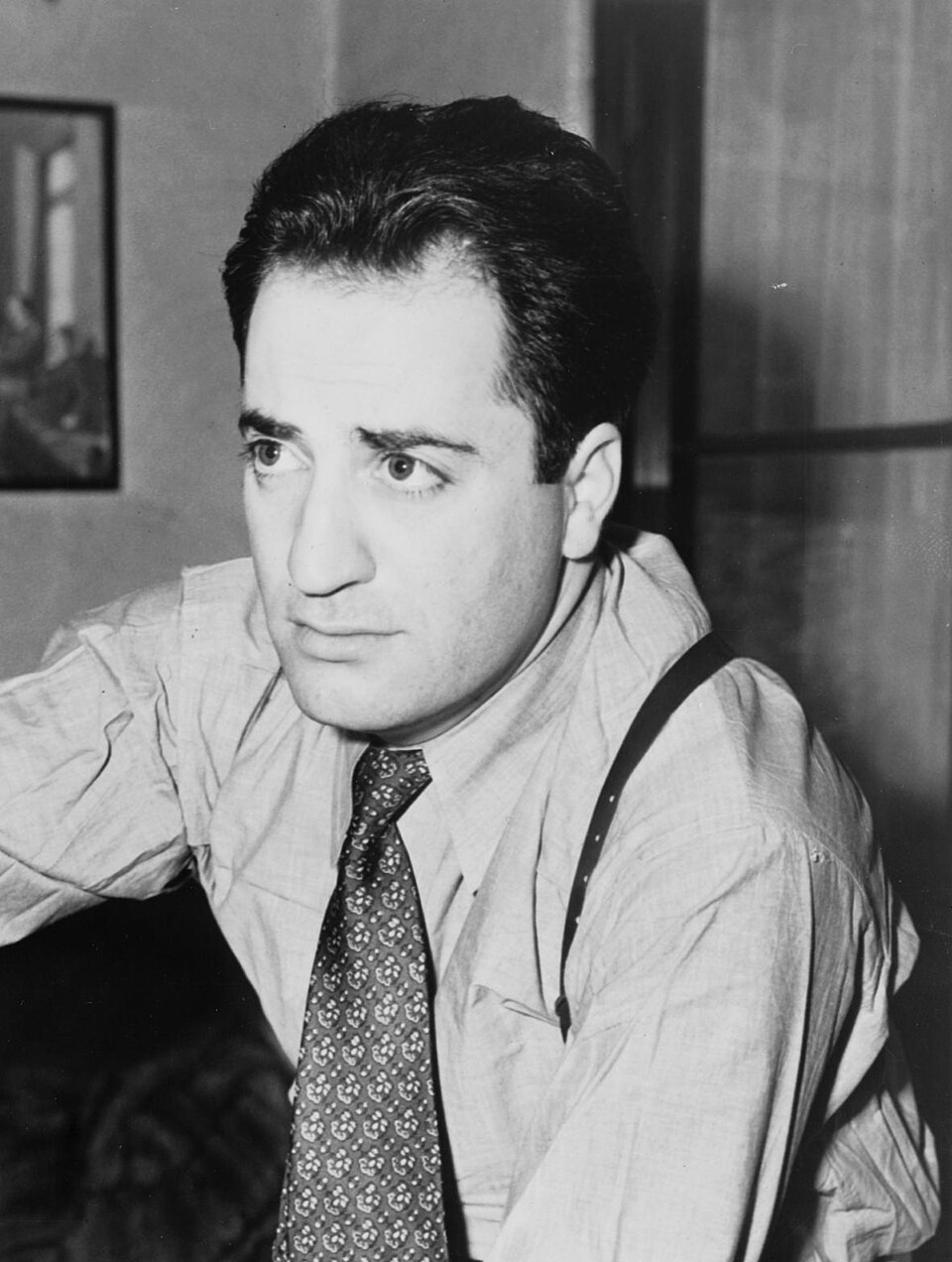
Author: William Saroyan
Publication Date: 1943
Genre: Fiction
Listen to the audio version of this review
spacer
Every now and then, you might find a book that makes you a little wistful when you finish, because you’d like to be able to experience it new again. William Saroyan’s The Human Comedy is one of those.
Saroyan used mini-chapters—often just two or three pages—to provide snippets of life in fictional Ithaca, California, during World War II. Rather than a strong overarching plot, the book provides vignettes—sometimes unrelated to one another—of happenings over a few spring and summer months. But as you progress, the scraps form a picture of community. And you begin to develop an attachment to the book’s characters.
Much of the story is told from the viewpoint of the MacCauley family and their friends and neighbors. Saroyan was especially masterful in portraying the perspectives of fourteen-year-old Homer MacCauley and his younger brother, four-year-old Ulysses. But you are also treated to delightful snapshots of other denizens of Ithaca.
Saroyan makes you laugh out loud occasionally, but he also presents some rather sad and touching scenes. His conclusion is poignant and hopeful.
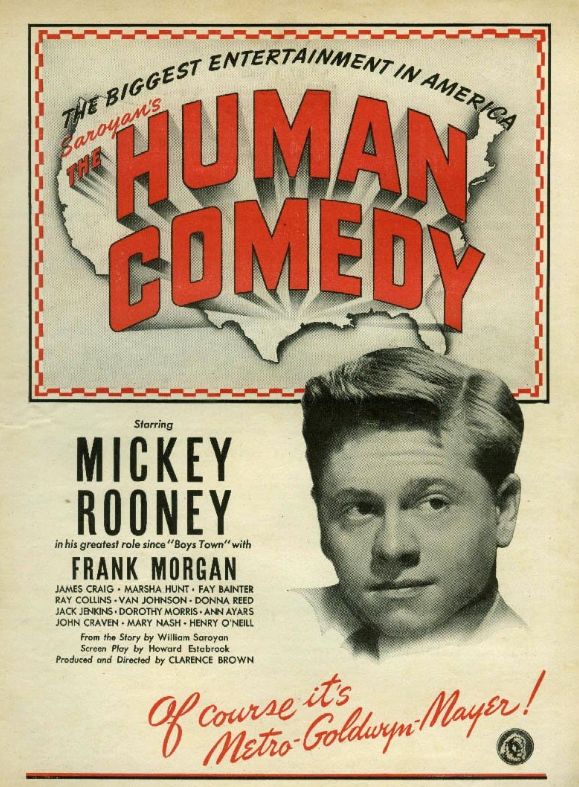
By the way, the novel resembles the 1943 movie, The Human Comedy, only a little. The movie is overly sweet, sentimental and corny—even for the 1940s. Don’t judge the book by the movie.
The Human Comedy is a book to savor, and to be read again when it suits you. Quite simply, it is a story that will make you feel good.
Movie/TV Adaptation
The Human Comedy (1943)
Sources For This Book
Free eBook (Project Gutenberg): Not available
Free Audiobook (LibriVox): Not available
Available to Purchase: AbeBooks, Biblio, Thriftbooks
